There are no items in your cart
Add More
Add More
| Item Details | Price | ||
|---|---|---|---|

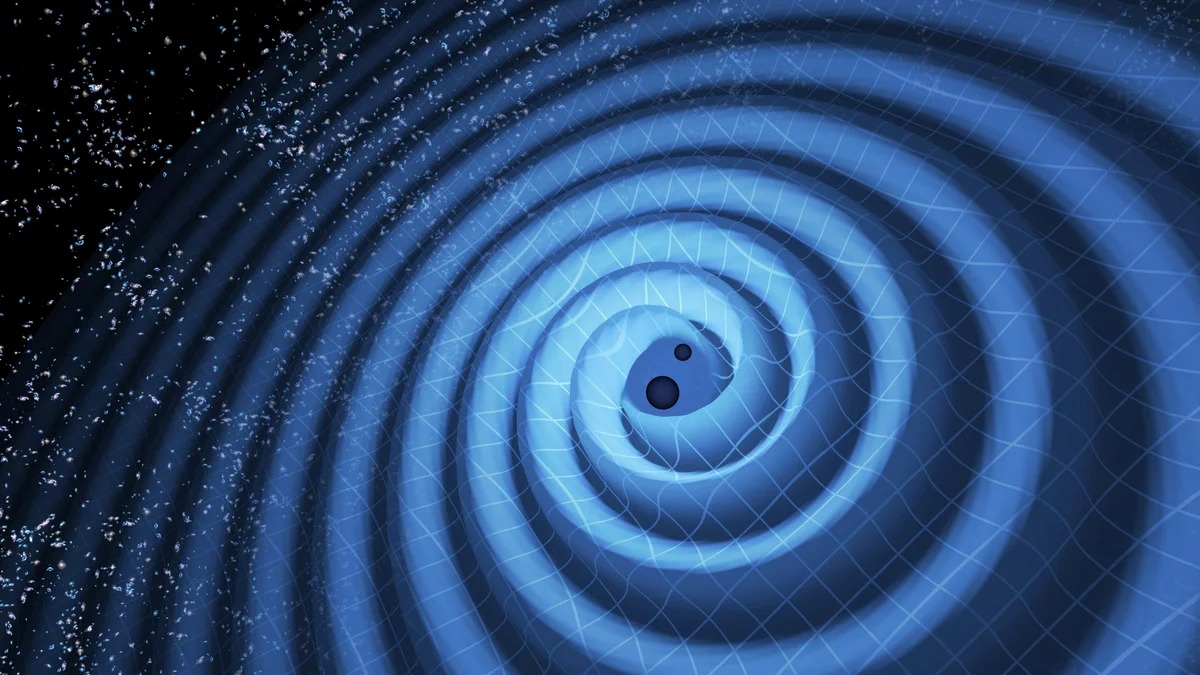
"Journey into the Heart of Black Holes: Explore Gravitational Waves and Quasinormal Modes through Black Hole Perturbation"
Registration deadline: 4th August 2024
Orientation on 5th August 2024
Instructor: Sagar J C and Krishna Anand Language: English
An 8-week research-based program that delves into Gravitational Waves (GWs), GW data analysis, Perturbation of Black holes, and Quasinormal Modes (QNMs). Participants will be given an overview of General Relativity, Black hole spacetimes, and the Kruskal diagram. Participants will also investigate the linearized Einstein’s field equations, derivation of the gravitational wave equation, analysis of the properties of gravitational waves, and the functioning of GW detectors such as LIGO, VIRGO, and LISA. Additionally, there will be a mini-project on GW data analysis.
The next stage will cover Black hole perturbation and QNMs. This will include perturbing black holes via the massless scalar field, electromagnetic vector field, and gravitational field through Regge-Wheeler formalism. This will result in a 2nd-order Schrodinger-type perturbation equation whose eigenvalues are the quasinormal modes and the solution is the gravitational wave ringing. Participants will also learn two methods to obtain quasinormal modes for black holes: WKB approximation and Prony series fit for the time-domain profile. The project concludes with the calculation of the reflection + transmission coefficients for radiation traversing the curved spacetime near the black hole, Estimating the photon sphere and black hole Shadow Radius.
• Review of General Relativity, & spherically symmetric solutions of Einstein's Field Equations, and Kruskal diagram
• Gravitational Lensing: Particle trajectories in curved spacetime. Geodesics, circular orbits
• Linearized field equations and deriving gravitational wave equation
• Operational principles of GW detectors like LIGO, VIRGO, and LISA with a small mini-project
• Scalar, Electromagnetic and Gravitational Perturbation of non-rotating black holes
• Obtaining QNMs using higher order WKB approximations, Prony series fit for Time domain perturbation profile
• Calculating Black hole Grey-body factors: Reflection and Transmission Coeffecients
• Null-like critical orbits, Photon Sphere, Shadow Radius of Black holes and its relation with QNMs
• Use SymPy, NumPy and EinsteinPy modules of python or Mathematica to numerically obtain all parameters (like QNMs, Grey-body factors, Shadow Radius, etc) for various kinds of Black holes
• Work individually or with a team. Choose a type of black hole spacetime and study its parameters numerically
• Learn to research effectively and write a project report
Week 1
Week 2
Week 3
Week 4
Week 5
Week 6
Week 7 and 8
Ph. D. Physics, Tata Institute of Fundamental Research, Hyderabad, India (ongoing)
An aspiring physicist holds an M.Sc. in Physics from the National Institute of Technology Karnataka. He is passionate about Theoretical Physics and is keen on conducting research in high-energy physics, particularly in the field of quantum gravity. He has been associated with Naxxatra Sciences since Sept 2020 and is currently responsible for overseeing Online Academic operations.
M. Sc. in Astrophysics at KU Leuven, Belgium (ongoing)
The timings of classes are flexible based on the choice of students & the mentor's availability. They are one hour long between 6 pm to 9 pm (IST).
No. The class timings for the programs will not overlap.
There will be three live classes per week apart from any Scientist lectures/ Guest talks that may be scheduled.
The classes will be held via Zoom and every class/discussion session will be recorded with life-time access.
 Launch your Graphy